- 2018
POMPIDOU BLUE
We are in Paris at the invitation of Forbo for the launch of the new collection designed by renowned French designer Philippe Starck for the Flotex brand. During our short trip to Paris, our new destination is the Centre Pompidou, one of Paris’s iconic examples of modern architecture, named after France’s second post-World War II president, Georges Pompidou.
The building is a cultural center that opened in 1971 at the request of President Pompidou, was selected and constructed as a result of a competition involving 681 architects from 49 countries, opened in 1977, and has hosted hundreds of millions of visitors to date. In the competition, the jury, which included distinguished architects such as Oscar Niemeyer, Jean Prouvé, and Philip Johnson, selected the project by the team consisting of Italian architects Renzo Piano and Gianfranco Franchini and British architect Richard Rogers.
Beyond its museum identity, the building is a comprehensive cultural center with exhibition and cinema halls and a library. It is located in the Beaubourg district of Paris, in the heart of Chatelet and Marais, two of the liveliest areas of Parisian daily life. We always visit this center at least once during every trip to Paris and stop by George, the magnificent restaurant on the top floor with its stunning view of Paris, at the end of the day.
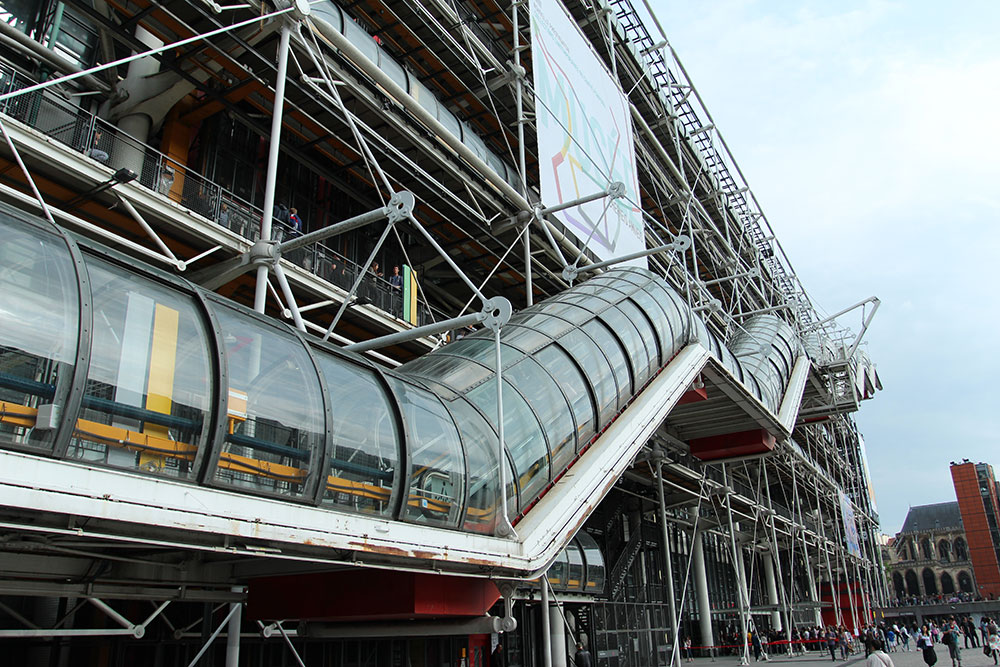
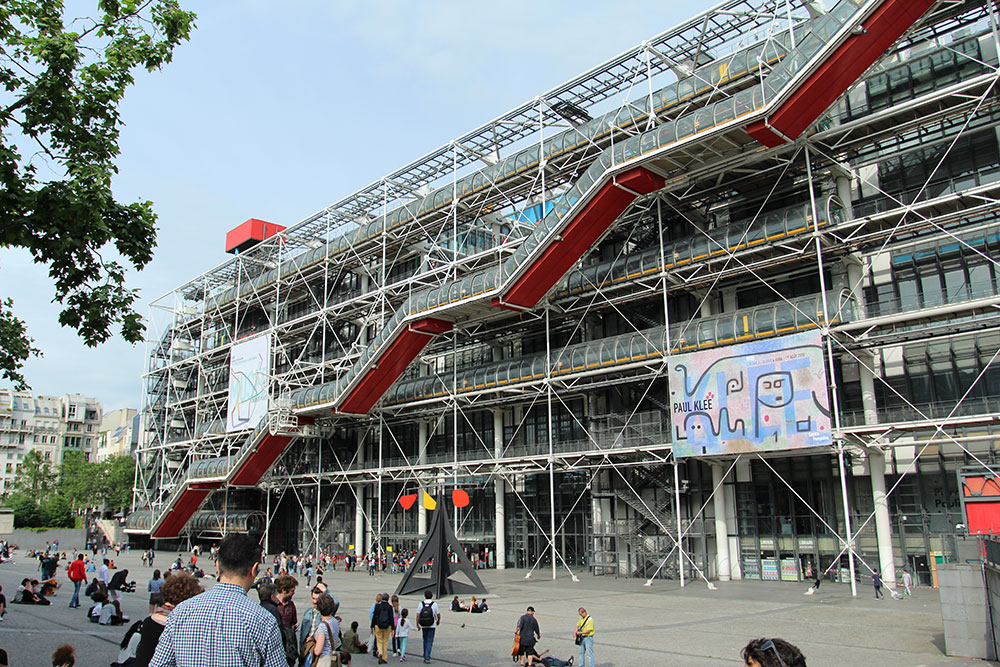
Renzo Piano states that he liberated the interior space by removing all circulation and technical volumes from the building he designed. He explains that this approach created suitable environments for different cultural activities. Although the building has been subject to much criticism due to its industrial appearance, it is considered a landmark. The square in front of it, in particular, is open to the public and offers different experiences, complementing the building and forming a unified character. Another detail is that it is a social structure that gave a brand new face and identity to an area that was not in the public eye and was somewhat dangerous at the time it was built.
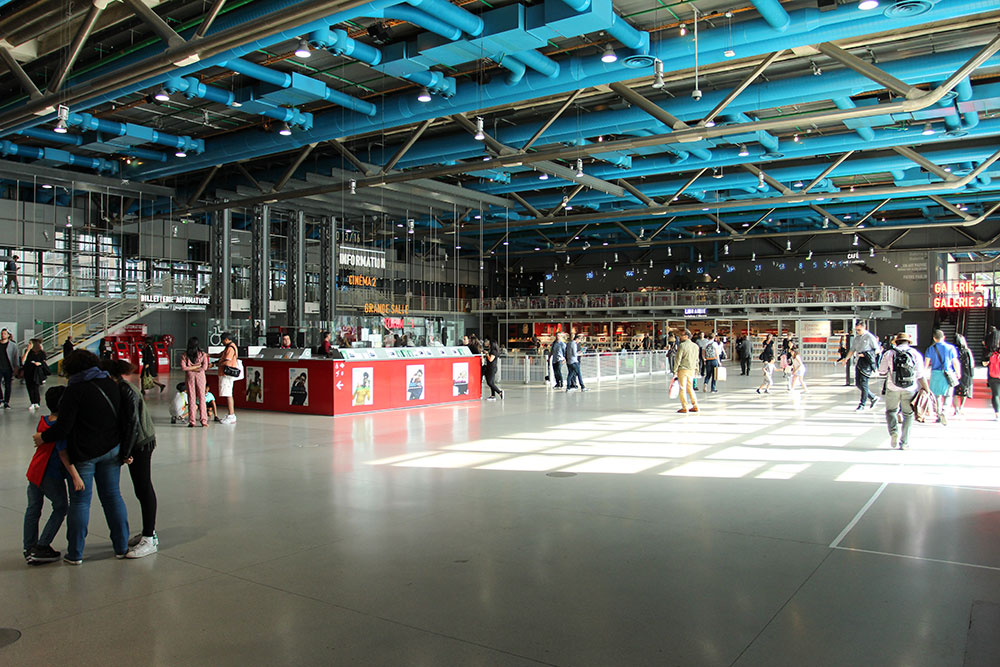
Technically, 15,000 tons of steel structural elements were used throughout the entire building, which consists of 10 floors above ground and 7 floors below ground. The structure’s 48-meter span was crossed in a single span using steel truss girders, creating a free area measuring 50 x 170 meters. An important detail is that these steel trusses were brought in as single pieces from the streets of Paris at the time, with some routes closed off. Another interesting detail is that, given the capabilities of the time, there were no fire-resistant protectors that could be applied to steel support systems, so water is continuously circulated through the building’s vertical steel supports.
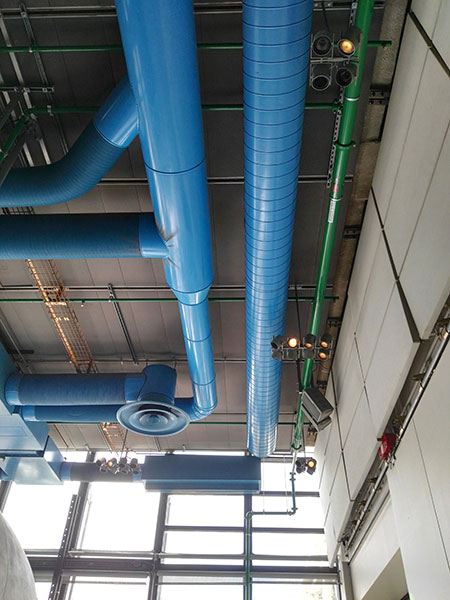
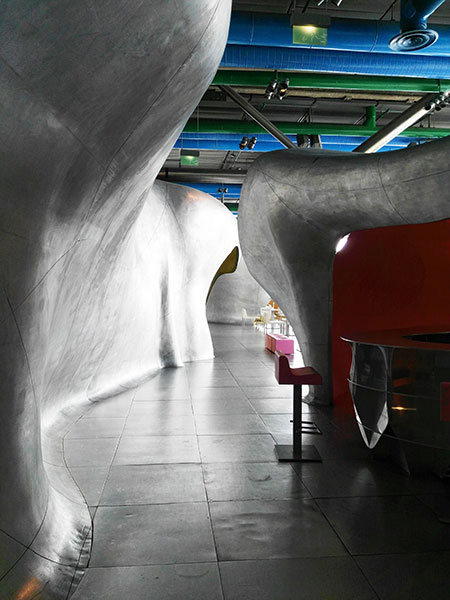
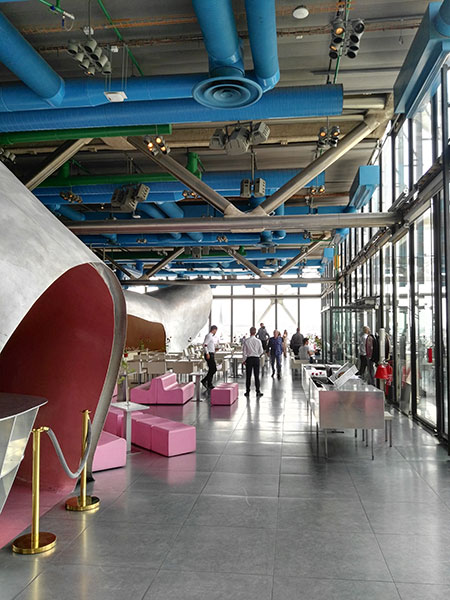
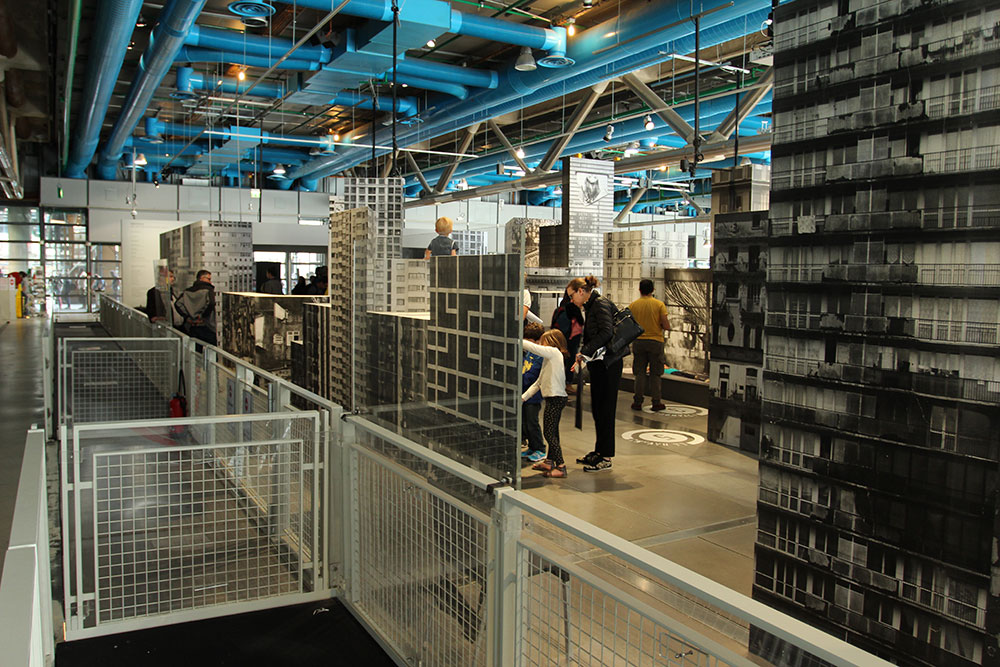
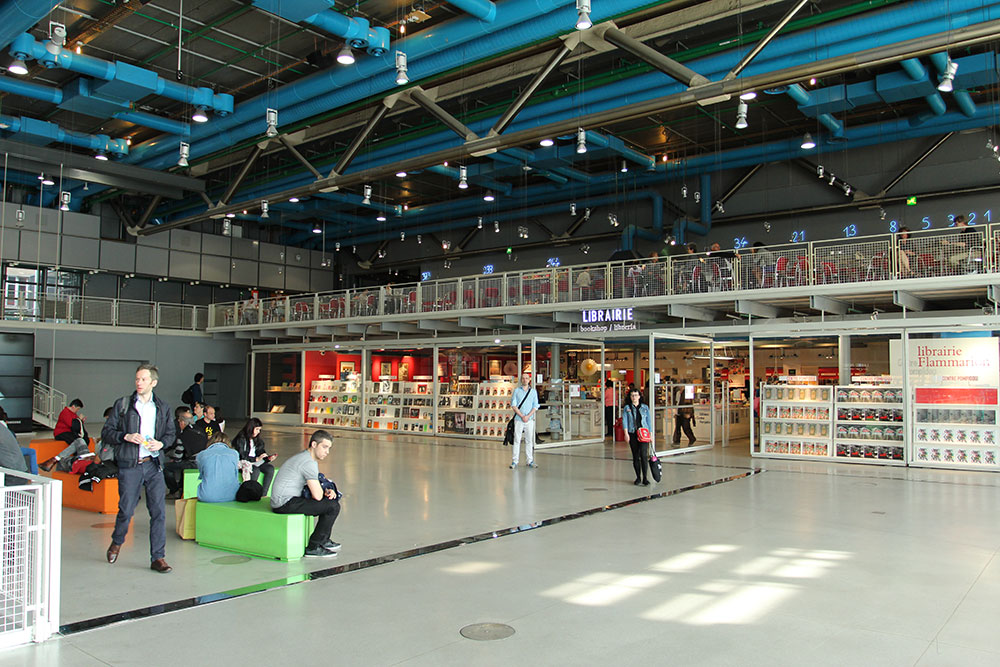
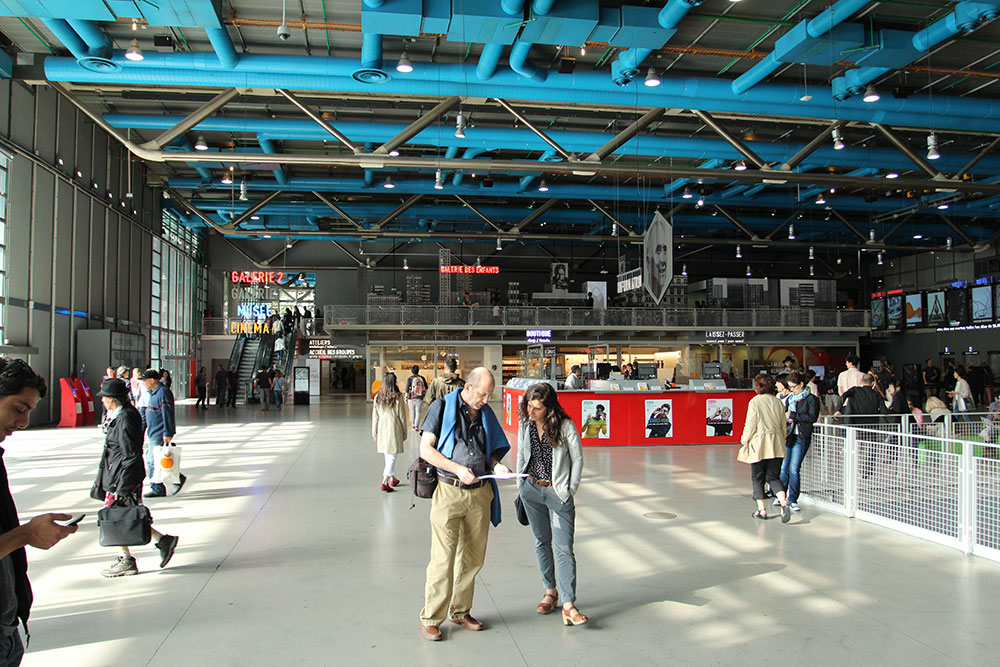
While the structure has quite large and flexible spaces, it has an architecture that seems to open itself and its internal structure to the outside. The colors are also symbols of this outward opening. Red symbolizes human circulation, green symbolizes liquid, yellow symbolizes electricity, and blue symbolizes air. The blue color has a very characteristic appearance, not only in its vertical effect on a section of the exterior facade, but also on the ceiling of the main entrance floor and on the ceiling of the restaurant on the terrace floor.
In contemporary architecture, this structure and its details represent a bold step, designed under the challenging and rigid conditions of its time, which paved the way for the frequent use of technical elements in both interior and exterior spaces. As architecture is a profession that requires open-mindedness, innovation, and courage, one of the most beautiful, meaningful, bold, and story-filled uses of blue, in our opinion, is the blue accent within the Centre Pompidou.